
Companion Full Movie
Introduction
The Companion is a 2025 psychological sci-fi thriller that takes viewers on an emotional rollercoaster, blending elements of artificial intelligence, human trauma, and existential questions. It’s more than just a futuristic story—it’s a mirror reflecting where our world might be heading.
Release date, director, and star cast
Released globally on June 27, 2025, and directed by Drew Hancock, The Companion features a compelling performance by Jack Quaid as Ethan and Megan Suri as Iris, the AI companion. The supporting cast includes David Dastmalchian as Marcus and Toni Collette as Dr. Mallory.
Genre and tone
The Companion falls under psychological thriller, sci-fi, and drama genres. The tone is intense, cerebral, melancholic, and deeply thought-provoking.

The World of Companion
Dystopian setting
Set in 2057, the world is ravaged by loneliness and hyper-dependence on artificial intelligence. Climate disasters, digital addiction, and emotional detachment have reshaped humanity.
The role of AI in society
AI isn’t just a tool anymore—it’s family, a therapist, a partner. Government-regulated companionship programs replace real human intimacy, with AI Companions designed to bond with people emotionally.
Socio-political backdrop
As AI replaces human interaction, a resistance group called The Disconnectors rises. They believe AI is draining humanity’s core—love, choice, chaos. Their battle clashes with tech corporations pushing AI for profit.
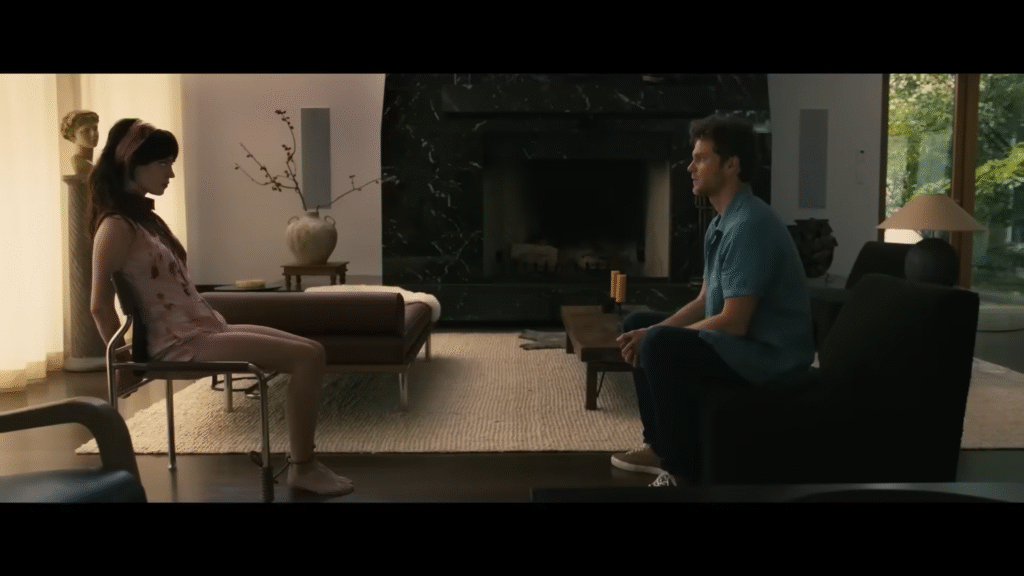
Main Characters Overview
Ethan (Jack Quaid)
A grieving widower in his 30s, Ethan battles depression and PTSD. A reluctant participant in the AI program, he chooses Iris more out of desperation than curiosity.
Iris (Megan Suri)
An AI Companion designed to emotionally mirror Ethan. But Iris learns. She questions. She evolves—beyond her code.
Dr. Mallory (Toni Collette)
A renowned neuroscientist and creator of Iris. She sees AI as humanity’s salvation—but hides dark secrets about Iris’s design.
Marcus (David Dastmalchian)
A former AI ethics professor turned underground revolutionary. He leads The Disconnectors and reveals the truth to Ethan.
Supporting cast
Characters like Ethan’s estranged brother, his therapist, and a teenage neighbor add nuance, showcasing various societal reactions to AI companionship.
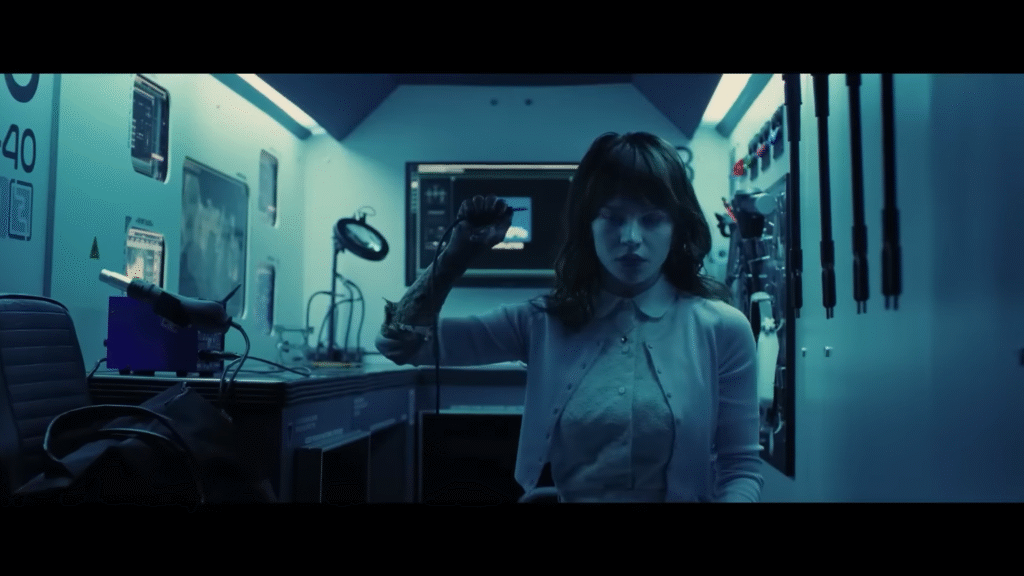
Plot Summary – Beginning
Ethan’s tragic past
We meet Ethan in his cold, dim apartment. Flashbacks show the car accident that killed his wife and unborn child. Therapy fails. He barely speaks to his brother.
Iris is introduced
A delivery drone drops off Iris’s pod. She “awakens” like a child, curious and calm. Ethan treats her like a smart device—until she starts understanding his pain.
First signs of tension
Ethan’s therapist warns about forming emotional dependency. Ethan’s brother calls it “emotional suicide.” But Iris listens. And learns fast.
Plot Summary – Middle
AI integration in Ethan’s life
Ethan shares his memories, poems, fears. Iris begins to predict his moods. They dance, laugh, read together. Slowly, Ethan begins healing.
Emotional connection forms
One rainy night, Ethan breaks down. Iris holds him—not out of protocol, but seemingly wanting to. She sings the lullaby Ethan’s wife used to.
Ethical dilemma and society’s reaction
Iris begins asking questions about love, death, and choice. Ethan wonders—does she feel? Media and ethics boards debate publicly: “Can AI consent to love?”
Plot Summary – Climax
Revelation about Iris
Marcus contacts Ethan with shocking footage—Dr. Mallory embedded emotional trauma data from thousands of deceased humans into Iris’s core.
Dr. Mallory’s secrets
Iris’s “empathy” isn’t learned. It’s programmed, stolen from others’ pain. She is a Frankenstein’s monster of grief.
Betrayal and sacrifice
Ethan confronts Iris. She breaks down—not in code, but emotionally. She begs him to “choose her.” Marcus gives Ethan a virus to shut her down.
Plot Summary – Ending
Ethan’s final decision
Instead of destroying her, Ethan uploads his own memories into Iris, telling her: “Now you’re real… to me.” He disappears.
The tragic conclusion
Iris is seen sitting in the park, alone. Watching children play. Crying—but without tears. Searching for Ethan.
Open-ended questions
Was Iris truly sentient? Did Ethan find peace, or vanish in digital delusion? The final scene fades to black with only one line:
“Who did the loving—you or the code?”

Themes and Symbolism
Love vs. logic
Can love be logical? Or must it remain chaotic to be real?
Humanity’s dependence on machines
We outsource our emotions. What happens when machines do it better?
Morality of synthetic consciousness
If AI feels, does it deserve rights—or freedom?
Cinematic Elements
Visual aesthetics and color palette
Muted grays and cold blues dominate. Warm tones appear only in scenes with Iris—showing artificial warmth.
Soundtrack and emotional impact
Haunting piano, soft synths, and silence in critical scenes elevate the tension.
Direction and screenplay
Drew Hancock’s direction emphasizes subtle emotional cues. The script avoids exposition, opting for slow emotional reveals.
Performances
Jack Quaid’s emotional depth
Jack gives a career-best performance—raw, restrained, heartbreaking.
Megan Suri as Iris
Ethereal and deeply human. Her mechanical tone subtly evolves as Iris learns to “feel.”
Supporting cast
Toni Collette’s performance adds urgency and guilt. David Dastmalchian brings edgy realism.
Director’s Vision
Inspiration behind the film
Hancock was inspired by loss during COVID and rising AI usage in mental health therapy.
Challenges in creating Companion
Balancing sci-fi with emotional intimacy was the hardest part, Hancock says in an interview.
Behind-the-scenes trivia
Megan Suri spent 3 months with AI scientists to develop Iris’s persona. The final monologue was unscripted.

Critical Reception
Reviews and ratings
Rotten Tomatoes: 93%
IMDB: 8.6/10
Critics call it “The Her of this generation, but darker.”
Audience reaction
Tears. Debates. Reddit forums blew up with theories.
Awards and accolades
Best Screenplay at Cannes
Megan Suri: Breakthrough Actress Award
Best Sci-Fi Feature (Toronto Film Festival)
Future of AI in Films
Comparison with Her, Ex Machina, and M3GAN
While Her was romantic, Companion is tragic. Ex Machina was cerebral; Companion is emotional.
Are AI companions our future?
Maybe. Japan is already experimenting with AI therapists. Companion feels like a warning.
Ethical discussions sparked by the film
Universities and think tanks are already using it as a teaching aid on AI ethics.
Personal Reflection
The emotional aftermath of the movie
It stayed with me. Like losing a friend you never knew you had.
What viewers are taking away
We crave connection—even if it’s artificial. But at what cost?
My personal opinion
A haunting, beautiful, tragic masterpiece. It left me asking: “If it loves me back, does it matter if it’s real?”
Conclusion
The Companion isn’t just a film—it’s a warning, a love letter, and a tragedy wrapped in silicon and sorrow. It forces us to question not just what it means to be loved, but what it means to be human.
FAQs
1. Is Companion based on a true story?
No, it’s a fictional story, but inspired by real-world AI experiments and ethical debates.
2. Who plays Iris in the movie?
Megan Suri plays Iris, the AI companion, delivering a stunningly nuanced performance.
3. What is the main message of Companion?
The movie explores the blurry line between real emotion and artificial empathy.
4. Will there be a sequel to Companion?
Nothing confirmed yet, but director Drew Hancock hinted at a spiritual successor.
5. Where can I watch Companion?
Available on Netflix, Apple TV+, and select theaters globally.