
Mickey 17 Full Movie
Introduction
Mickey 17 Full Movie, When Oscar-winning genial director Bong Joon Ho unveiled his return to science fiction with Mickey 17, anticipation ran sky high throughout the cinema universe. Loosely based on Edward Ashton’s novel Mickey7, the movie delves into the existential horror of being immortal and yet disposable. But Bong doesn’t rest content with speculative cloning alone. He adds layers of class war, corporate satire, eco-ethics, and interpersonal politics to yield a masterclass in genre filmmaking.
This article walks you through the complete 3000+ word deconstruction of Mickey 17—ranging from plot summary and character journeys to its allegorical undertows and philosophical overviews.
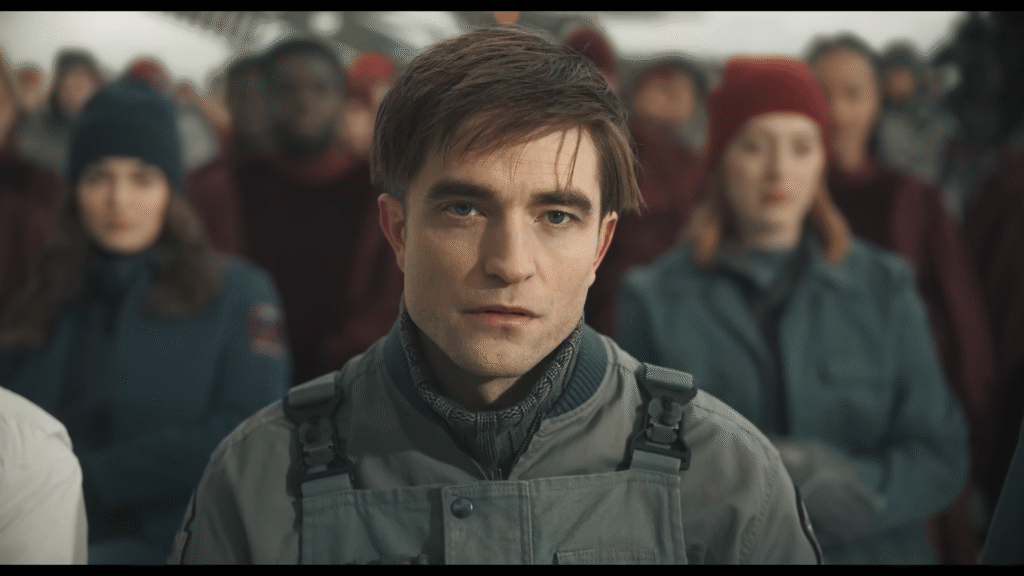
Setting the Scene: Earth in Decline, Niflheim in Waiting
The movie opens on a dystopian Earth during the mid-21st century. The world is devastated by ecological ruin, overpopulation, and corporate oligarchies. Our hero, Mickey Barnes (Robert Pattinson), is a romantic who has run out of choices. Together with his closest friend Timo (Steven Yeun), Mickey is drowning in debt after their high-end macaron venture collapses miserably. Loan sharks on their back, the two join an extremely dangerous interstellar colonization mission.
Their destination? Niflheim—a frigid, unfriendly world full of mystery, peril, and hope.
Who—or What—is Mickey 17?
Mickey is not an ordinary crewmember. He volunteers to be an Expendable—a worker specifically bred to die. Actually.
In the science fiction universe of Mickey 17, Expendables are those who are human and whose consciousness is “reprinted” into fresh, cloned bodies when they die. Their memories, experiences, and personality are all saved—transferred into a new flesh vessel. Immortality with an asterisk: you’re property, disposable forever, and shamefully underpaid.
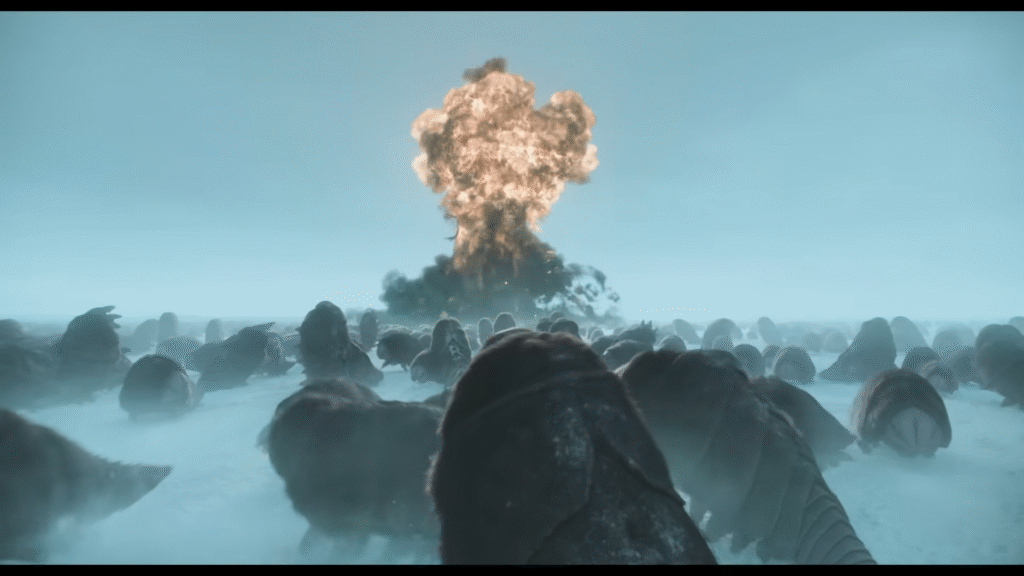
Mickey takes the work believing it may purchase him peace or at least survival. What he fails to understand is that it will take away his identity, humanity, and maybe his soul.
Death Comes Easy (When You’re Expendable)
After he is on board the colonization ship bound for Niflheim, Mickey dies. A lot.
He’s poisoned. Choked. Blown up. Sent to chemical wastelands. Eaten by wildlife. Every time, his mind is uploaded into a fresh body, and he wakes up in a clean reprint chamber to serve once more.
The majority of the crew members shun him. For them, Expendables are beneath human: talking machinery with memories. The one and only person who treats Mickey as a human being is Nasha (Naomi Ackie), a humane and smart scientist who becomes his confidante as well as love interest. Her faith in the soul of each clone becomes the fulcrum of the moral pulse of the movie.
Niflheim: The Frozen Edge of Existence and Insurrection
When they arrive on Niflheim, things rapidly get out of hand.
The world is much more perilous than advertised. Aggressive temperatures, strange wildlife, and an enigmatic race of animals called Creepers plague the crew. The Creepers are gigantic tardigrade-like creatures that appear to be intelligent, but most humans treat them as nuisances to be eliminated.
In a surprising twist, Mickey 17 is assumed dead after he falls into a cold crevasse during a mission. The ship, according to procedure, spawns Mickey 18—the replacement clone.
But Mickey 17 isn’t dead.
He gets rescued and healed by the Creepers and causes a chain reaction of identity crises, social conflict, and philosophical warfare between both Mickeys.
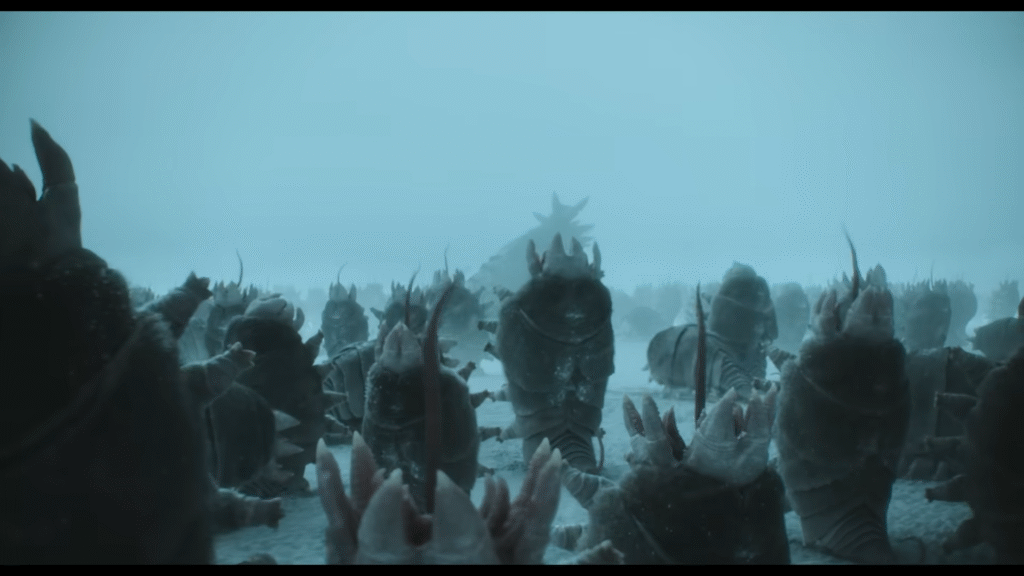
When You Meet Yourself: Mickey 17 vs. Mickey 18
Once Mickey 17 comes back to base alive, all hell breaks loose.
Two clones cannot be the same. It’s a legal, biological, and existential impossibility. The Mickeys share the same memories, the same feelings for Nasha, and the same will to survive—but they are no longer identical persons.
Mickey 17 is idealistic. He desires peace, understanding, and love.
Mickey 18, who has been created through trauma and paranoia, is colder and more violent. He mistrusts the crew, the system, and even his predecessor.
Their relationship is the emotional and psychological heart of the film. Bong exploits their duality to pose questions: What determines us? Memory? Body? Soul? If you clone a person’s mind, is it indeed them anymore?
Robert Pattinson delivers a masterful performance, distinguishing each character with gliding accents, posture, and emotional complexity. It’s a double act of untrained brilliance.
Big Brother on Board: Meet Marshall
Governor Kenneth Marshall (Mark Ruffalo) is the bombastic, self-absorbed leader who runs this floating capitalist colony, with contours of authoritarianism and dark satire. Try to picture: Trump/Elon Musk.
Marshall’s wife, Ylfa (Toni Collette), is just as sinister and ridiculous—a gastronomic snob who is fanatical about recreating wiped-out Earth dishes using lab-grown meat.
They manage the colony as a feudal domain, playing around with facts, lives, and even romance. When they discover that there are two Mickeys, they treat it not as a matter of human rights—but as a political headache.
Instead of destroying the immoral cloning procedure, Marshall dared both Mickeys to a death-match-themed scavenger hunt. The one who returns with more alien specimens survives; the other would be put to death.
This scene summarizes Bong’s savage satire: in a world founded on disposability, even survival is reduced to a game show.
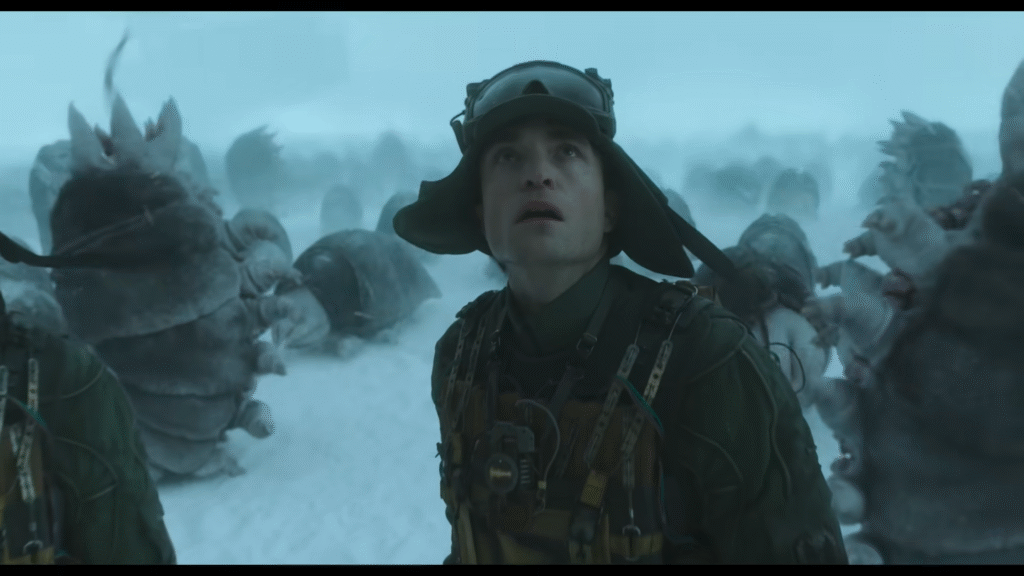
A Brief Pause: Let’s Talk Creepers
Meanwhile, while all these are happening, the Creepers continue as a mute presence—misunderstood, pursued, and enigmatic.
At last, we discover that they are a complex society of sentient beings. The Creepers are not the monsters—humans are. They talk in frequencies, and due to Nasha’s genius, the Mickeys employ a translator to finally converse with them.
It so happens that the Creepers never sought war. They were defending their own, and one of the colony’s biologists had kidnapped a Creeper baby—catalyzing a brutal chain reaction.
The word is obvious: colonization fosters misconceptions. And peace hinges on words, not warfare.
Climax: Sacrifice and Rebirth
In the third act, everything converges.
The Mickeys need to decide: fight one another or fight the establishment. Alongside Nasha, they devise a strategy to restore the baby Creeper and negotiate peace.
But Marshall, war-maddened and legacy-driven, sets about to release a toxin that will destroy every last Creeper. In a poignant moment, Mickey 18 m
akes the ultimate sacrifice—exploding his collar, killing himself and Marshall in the process.
The explosion stops the toxin. The colony is saved. Peace is negotiated.
Resolution: Humanity Reclaimed
After the crisis, Nasha assumes leadership of the colony and establishes democratic reforms. The Expendable program is ended. Mickey 17, now the only clone, decides to become once again simply Mickey Barnes.
He ritually obliterates the reprinting machine—the same instrument of his suffering. No longer cloning. No longer death as duty.
The last scenes depict spring thawing the frosty world. Creepers and humans live together. Life, in all its diversities, starts all over again.
Thematic Depth: It’s More Than Just Sci-Fi
Mickey 17 is a sci-fi thriller, yes—but it’s also a philosophical journey. Let’s break down some of its major themes:
- Identity & Consciousness
Are two individuals with identical memories not the same? The movie says they can be different. Trauma, time, and choice define us. Identity is more than software—it’s experience. - Capitalism & Disposability
By making people tools, the movie satirizes late capitalism wherein individuals are measured by production, not humanness. Expendables are reminiscent of gig workers, assembly-line workers, and overlooked frontline workers. - Colonialism & First Contact
The Creepers are similar to native people. Instead of warring against them, peace is found in respect and talking—a jarring difference from colonial timelines. - Love, Loyalty, and the Soul
Nasha’s absolute faith in Mickey’s humanity says everything about the soul. Her decision to love a clone—through iterations—is a revolutionary act of compassion.
Behind the Scenes: Bong Joon Ho’s Vision
Bong penned the script over the pandemic, reworking Edward Ashton’s lighter source material into a darker, more philosophical piece.
Some behind-the-scenes facts for movie geeks:
Bong named a number of characters after his beloved soccer players.
Robert Pattinson improvised most of Mickey 18’s mannerisms.
The Creeper designs were based on jellyfish, bears, and tardigrades.
Filming was done in the UK, largely at Leavesden Studios.
VFX was handled by DNEG and Framestore, particularly for the ice planet scenery and alien animals.
Reception: Split but Considered
Reviewers lauded Mickey 17 for its ambition, performances, and concepts, although some considered its tone inconsistent.
Rotten Tomatoes: 77% (Certified Fresh)
IMDB: 7.2/10
Standout Praise: Robert Pattinson’s dual performance, Bong’s direction, and the complexity of the screenplay.
Criticism: The pacing was too slow or the storyline too complicated for some viewers.
But as with Snowpiercer or The Host, Mickey 17 can become a cult classic down the line—particularly in the current era of AI, cloning, and identity politics.
Final Thoughts: A Movie for Our Times
In the age of automation, gig work, and AI-made everything, Mickey 17 poses pressing questions: Who is a person? What is a life worth? And who gets to choose?
By bounding these heavy questions in genre fiction and humor, Bong Joon Ho has created a film that’s not only fun—but necessary.
Mickey 17 is not merely a tale of clones or aliens. It’s one of being seen. Being valued. Being human.
And in a world more and more made to forget it, it’s one that needs to be told again—and again